Showing posts with label Food and Nutrition. Show all posts

Monday, October 1, 2012

The Oatmeal Switch Up


When you think about oatmeal, what are the toppings that automatically pop into your head? Probably maple syrup, brown sugar, apples, berries, nuts and milk. Right?

What if I asked you to think of oatmeal as a vehicle for savoury toppings? Sounds interesting, right?!

Oats are simply a blank canvass which lend themselves to sweet AND savoury flavours, equally. They are a healthy whole grain, similar to rice, quinoa or polenta - all grains that easily work as a sweet or savoury dish!

Now I understand if you prefer a sweet breakfast, so many of us do! However, I'm a sucker for a good warm savoury breakfast, so I asked myself: 'Why not switch up my oatmeal'? 


I think it's time that we shine the spotlight on oatmeal as a versatile nutrition power house.  So go ahead, adorn your bowl of oatmeal with a creative savoury option.  My latest thrill is topped with leftover roasted sweet potatoes and a soft poached egg.  Great for breakfast, lunch, light dinner or pick me up snack!

Ideas for Savoury Oatmeal
  • Cook your oatmeal in stock or lightly salted water instead of plain water.
  • Use leftover vegetables, legumes and protein to top plain oatmeal.
  • Add dry spices (cumin, curry, Italian seasoning,) while cooking.
  • Garnish with fresh herbs, cold pressed olive oil or balsamic vinegar.


Steel cut oats, roasted sweet potatoes, poached egg and porcini balsamic glaze!

Monday, February 7, 2011

Artichoke & Spinach Squares

Castroville's nickname celebrates its status a...Image via Wikipedia
These squares are off the hook delicious.  Chalked full of artichoke hearts and spinach, this savoury square makes for an excellent grab and go dish - anytime of the day! 

2 cups artichoke hearts*
1 packed cup thawed -frozen spinach**
4 organic eggs
3/4 cups cheddar (I use raw) or asiago.
1 Tbsp lemon juice
1 tsp nutmeg
1 tsp cayenne pepper
1 tsp black pepper

Preheat oven to 350 degrees
Place artichokes in food processor and blitz for about 15 seconds
Add spinach and continue to process until the mixture looks well combined - about 20 seconds.
(you may have to scrape down the sides of the food processor)
Add eggs, lemon juice, nutmeg, cayenne and pepper, and process until eggs are incorperated.
Pour mixture into bowl and stir in cheese.
Grease a 9 x 9 pan with butter.
Pour mixture into pan and place in the middle of the oven.
Cooke for approximately 45 minutes.
Let rest 15 minutes before cutting into squares.

*I use marinated artichoke hearts but you can also used plain jarred ones packed in water.  Adding 1/2 tsp of sea salt may be needed.
** Once spinach is thawed, place in a clean tea towel and squeeze out as much water as possible.

Facts about Artichokes
The bitter components of cynarin in artichokes, helps to regulate cholesterol levels.
They are low in calories and a rich source of dietary fibre.
Good source of  folic acid, B vitamims, vitmain C, K and trace minerals.
Rich in the anti-oxidant silymarin - protecting the body from free radicals.

Enhanced by Zemanta
These squares can be served cold or warm.

Saturday, December 18, 2010

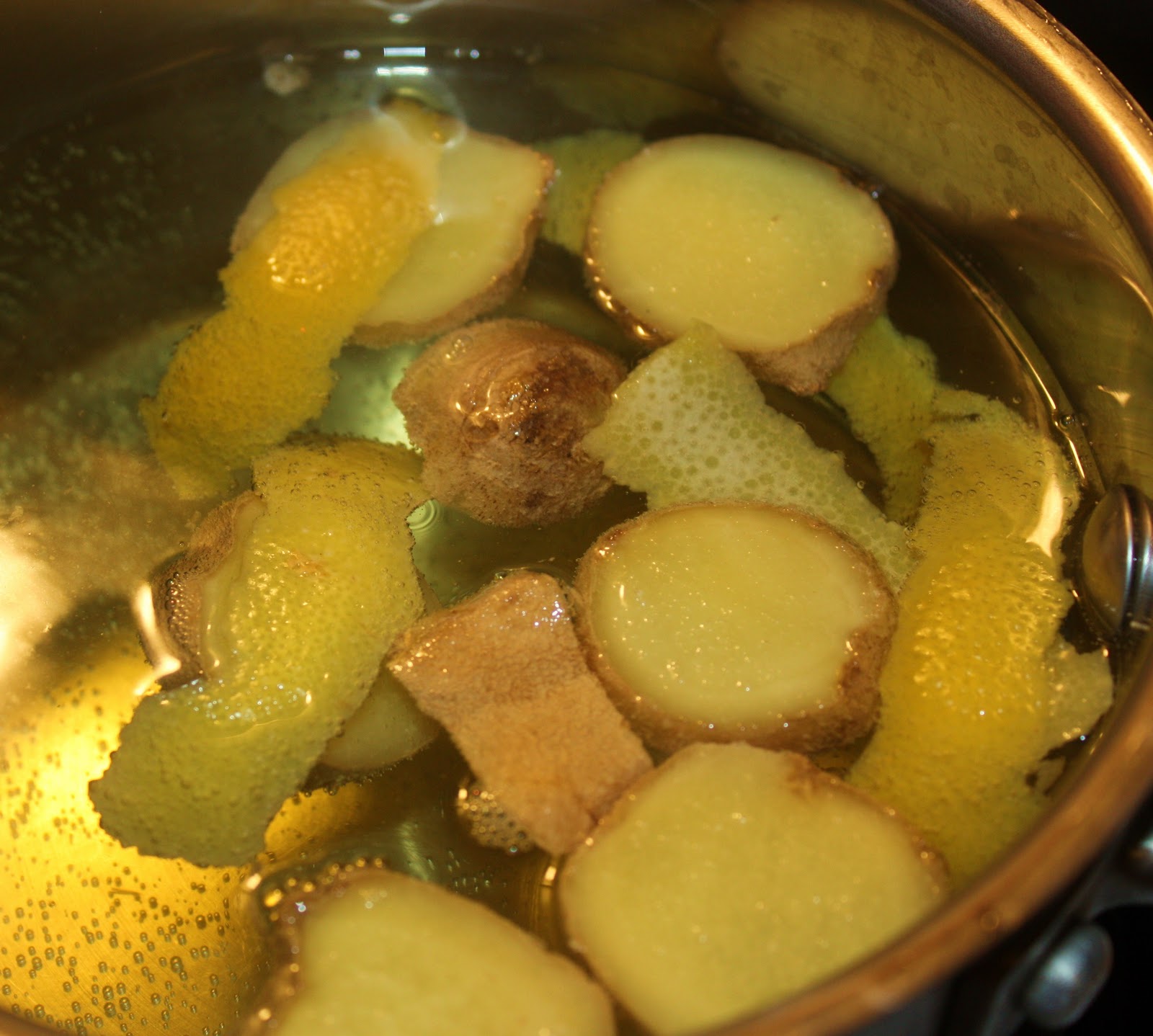
Ginger-Lemon Decoction!

There is nothing fancy about this drink - don't let the word decoction fool you.  A decoction simply implies the simmering or boiling of a substance (lemon and ginger in this case) in water!
There are few things I take when I'm feeling under the weather, not because I'm a martyr, but because most of the cold and flu remedies you buy in the drug store are simply a waste of money.  My go to remedies are often home brewed like a soothing bowl of soup http://insatiablefood.blogspot.com/2010/09/medicine-by-bowl.html or this healing drink that can be enjoyed both hot or cold!  Simple ingredients that don't suppress symptoms, but rather expedite the recovery process. 

Ginger has a pungent, hot and drying character. Used to increase circulation, promote sweating, as an excellent expectorant.  It is also know for its ability to prevent nausea and as an antiseptic.
Lemons are sour and astringent in character.  Lemon is anti-microbial, and helps to dissolve mucous.  Making it very useful for colds, flu's and hacking coughs

The final ingredient is optional depending on your need for sweetness.  Honey is a great addition for children and very little is needed. 

Recipe
6 cups cold water
3-4 wide strips of lemon zest
2" piece of ginger, sliced into rounds
Juice of 1 lemon
1-2 Tbsp honey (optional)

Place water, zest and ginger in a pot.
Place pot over medium-high heat and bring to boil.
Turn heat down and simmer for 15 minutes.
Turn off heat and add lemon juice and desired amount of honey.
Enjoy immediatley or store in a glass contianer in fridge.

Tip:  Enjoy cold with a splash of sparkling water!

Tuesday, December 14, 2010

Candy Cane - Beets!

Candy Cane - Chioga Beet

Beets are the most amazing root vegetable.  Unfortunatley they suffer from a public relations issue - as people only remember the canned, less than flavourful variety.  A beautiful crimson, beets are delicious when prepared with love.  From a nutritional perspective beets contain folic acid, potassium and magnesium, calcium and phospohorus!  Also small amounts of vitamin C and B.  Beets are  known to support the liver in detoxification and as a blood cleanser. 

It is always best to purchase beets with the greens still attached; an added value as they are delicious added to stir frys and soups. I always like to peel my beets before I enjoy them, I find them bitter otherwise.

  • Eat beets raw,  grated on top of a salad .
  • Peel, quarter, drizzle with olive oil, sea salt and roast at 375 until fork tender.
  • Slice thinly, top with smoked salmon (or white fish) and drizzle with horseradish mayo!
Considering the snow is falling and it is quite cold outside, I thought I would make my version of this popular beet soup.  There are many variations to this recipe, this is the one I made for my family on a blustery cold day.

Borscht Soup

My butcher had no shank, so I used beef ribs!
10 cups beef broth
1 1b meaty  beef shank (or beef ribs)
1 large onion, quartered
4 large beets, peeled, chopped
2 medium carrots, peeled, chopped
2 russet potatos, peeled, cut into bite sized pieces
2 cups thinly sliced savoy cabbage
3/4 cup chopped fresh dill
2 tablespoons red wine vinegar
whole fat sour cream
Method
Bring 6 cups broth, beef shank, and onion to boil in large pot.
Reduce heat and simmer until meat is tender, about 1 hour 30 minutes.
Transfer meat to work surface; trim fat, sinew and bone and discard. Chop meat,reserve.
Skim some fat from surface of broth (if time allows you can chill it for a few hours so fat solidifies, making it easier to remove)  Add remaining broth, beets, carrots, and potato to pot.
Simmer until vegetables are tender, about 30 minutes.
Stir in cabbage and 1/2 cup dill, Cook until tender, about 15 minutes.
Add meat back in.
Stir in vinegar.
Serve
Garnish with  remaining dill and sour cream.

Beef Ribs Simmering in Stock with Onions

 
Carrots, Russet Potatoes, Beets and Cabbage


Monday, September 27, 2010

Sunday Fall Side Dishes!


Fall is my favourite time of year.  The colours, the crisp autumn days and all the amazing comfort foods that start showing up at family dinners.  My 8 year old spotted these carrots at our local organic market and insisted we buy them.  In gorgeous fall colours what mom could refuse.  Purple, white, yellow and traditional orange made up the 3 pound bag.  The flavour profile was the same, although not as sweet as orange carrots the purple, white and yellow variety tasted only slightly more like a parsnip.  While my 8 year old was happy to eat them raw, I roasted the majority to have as a side with our grass fed steak.  The other side dish, a zesty red cabbage and kale stir fry.

Afordable and plentiful carrots, cabbage and kale are nutritional and culinary workhorses. Raw or cooked these veggies can be enjoyed in a multitude of dishes.

Roasted Rainbow Carrots
2 lbs peeled carrots
1 Tbsp olive oil
1/2 tsp sea salt
1 tsp ground coriander
1 tsp ground cinnamon

Preheat oven to 375 degrees
To prepare carrots, cut each one lengthwise and then each half in half again.
Place in a roasting dish, toss with olive oil and spices.
Place roasting pan in oven for 45-60 minutes.  Depends on how thick the carrots are.
Cook until tender.


This dish is a nutritional powerhouse.  Chalked full of antioxidants, fibre, vitamins and minerals, kale and cabbage prevent cancer and help the liver eliminate unwanted toxins from the body.  Hearty and satisfying this colourful side is amazingly addictive. 
1/2 head red cabbage, shredded (about 4 cups)
1/2 bunch of kale, ribs removed and torn into bite sized peices
1/2 onion, sliced
3 slices bacon
2 cloves garlic, minced
1 tsp mustard seeds
1 tsp chili flakes
2 Tbsp apple cider vinegar
1 Tbsp honey or brown sugar(optional)
1/2 cup chopped pecans (walnuts and almonds work to)

In a large skillet over medium heat, cook bacon until brown,  remove and set aside.
Remove all but 2 Tbsp of bacon fat from the pan.
Add onion, garlic, mustard seeds and chili flakes and cook for 3 minutes
Add cabbage and kale and cook uncovered for about 10 minutes, stirring occasionally.
Add apple cider vinegar and brown sugar, mix in and cover.
Cook for another 10 minutes.
Add nuts, crumble in cooked bacon
Season with salt and pepper.


Tuesday, July 6, 2010

100 Calorie Snacks

These tiny packages hold the big promise of a satisfying treat with little calories. Nothing could be further from the truth. These 100 calorie snacks are a good example of how the marketing and packaging of food can sabotage our quest for weight loss and overall wellbeing. As you can well imagine I have many issues with these snack items.


The first should be obvious – over-processed food that has the nutritional value (taste and texture) of cardboard! In fact I am sure the big food companies could take cardboard, add some artificial flavours, package it and sell it to the hard core dieters. They could label it as fat free and high in fibre and it would sell like hotcakes. Eating one of these packages does nothing to curb hunger or satisfy; often it leaves the person wanting more food, food that can actually nourish the body.


Secondly – not all calories are created equal! This is a subject that will require a few blog posts but I wanted to touch on it since the subject line clearly reads 100 calorie snacks. Most dieticians will say that weight gain is related to taking in more calories than you expend. Most of the major diet systems are built around this premise of portion control. So too are food pyramids, and government food guides. Cutting calories may initially trigger weight loss; however it is only one part of a bigger story. A larger part of that story is how our body regulates the storage and release of energy (fat); this is done through hormones. A hormones ability to do its job well is determined not by the calorie content of a food, but by how efficiently our bodies can use what we eat. Therefore the quality of food you eat, determines how well you can maintain a healthy weight while being nourished. A 100 calorie snack holds no value here! The idea that the calorie alone determines weight loss and wellness is an idea that is being challenged.

Artificial flavours, preservatives..................too much to say here so stay tuned for another blog.

Another issue for me is PACKAGING. 6- 8 individual packages in an oversized cardboard box! That’s why it sells for an outrageous price. The consumer will pay for over processed; over packaged “food” because the value is falsified by how pretty the package is. Yes, I know you can recycle the box but both the recycling and manufacturing of it requires energy. A “food” product not worthy of all that energy usage!

So the next question I often get is “what are alternatives to the 100 calorie packages?”. I am hesitant to give choices as I really think we need to start thinking more about the quality of food and less about the quantity (calorie count).  When we enjoy fully nourishing meals, the need for snacking is often unneccesary. 


Enhanced by Zemanta

Thursday, June 24, 2010

Milking It!

I was like any other kid growing up - where milk reigned supreme. Milk was, and still is in many cases known as a health food. I slowly began to feel that milk wasn’t such a health food for my body. I suffered from stomach cramps immediately after drinking it; I also suffered from inflammatory conditions such as eczema and asthma. Something told me it was the milk – so I took it out of my diet at age 16. This had a dramatic effect on both the eczema and asthma and they both disappeared. I had friends with similar experiences; they chose to drink the lactose free variety. Although their cramping disappeared their skin conditions persisted. I wasn’t thoroughly convinced that lactose was the whole reason milk didn’t sit well with me. It wasn’t until years later as I was studying Homeopathic Medicine and Nutrition that I found out that many people had milk intolerances if not allergies.

Now I am not saying that milk is not healthy for you – in fact I think it can be. The milk we buy in the grocery store is a far cry from healthy and yes the general public has been duped.

What is Healthy Milk?
To get healthy milk you first must begin with a healthy cow. A cow that is fed a diet that nature intended at the pace nature intended. Most conventional dairy cows are fed a diet of grain and corn and that is just the beginning. Many are fed bakery waste, soy, chicken manure, I will spare you the rest but I suspect you get the picture. These cows are expected to yield an extremely high volume of milk and are therefore given hormones and fed a high protein diet – both leading to mastitis in the cow – aka pus in the teets . Conventional cows are also packed in like sardines; this density creates the perfect breeding ground for disease, which in turn leads to routine administration of antibiotics. It’s no wonder they need to pasteurize this milk – would you drink it as is? It’s like asking if you would drink water out of a really polluted body of water without boiling it first – I think not!

So what are our options? Most people would lean toward the milk substitutes, soy, rice, almond etc. These are no replacement for real milk. In fact these are nothing more than processed foodstuffs that often are full of sugar and preservatives. Organic milk is another option but you are not guaranteed that animals are eating a traditional diet either, only that the diet they eat is organic and their living conditions are better than conventional cows. Some organic cows are fed an appropriate diet which is predominately grass-fed – the diet they were meant to eat. Just be sure to do your research. The problem still with these organic milks is that they too are highly pasteurized.
My choice is real milk in the raw. Unadulterated, full fat milk from pasture raised cows. The way nature intended.

Pasteurization
Pasteurization of milk is a whole blog unto itself and its implications go beyond the parameters of this article. In short, pasteurization was essential in the 1800’s when conventional dairy farmers did not have access to adequate refrigeration and public sanitation and sewage systems were not yet efficient. Cows stood in manure and had no access to pasture. Resultantly unhealthy milk from these sources killed thousands of people. Pasteurization also allowed the milk from many different cows to be combined into one big vat regardless of how rancid and unsanitary it was.
Pasteurizing milk damages the innately healthy proteins, carbohydrates, fats and most importantly immune building compounds found in milk. Pasteurization deactivates many enzymes including lactase enzyme (responsible for breaking down lactose) which is actually the reason most people are lactose intolerant. While I could continue in this vein I will let you simply follow this link if you are interested in further information on this. http://www.realmilk.com/ppt/index.html or http://organicpastures.com/faq.html

When buying raw milk don’t go looking for low fat or skim varieties, you won’t find it. These choices are created by production plants and are often filled with starches and dry milk that is extremely high in oxidized cholesterol. The fat in milk is needed to assimilate the calcium into our bone structure as well as to absorb the vitamin D. The very two nutrients most of you drink milk for in the first place.

Is it safe?
Working for a major grocery store I see product recalls come across my desk every day for food that is supposedly safe. Even then people die and get sick from “safe food”, if you knew the numbers you would probably move to the country and grown your own, still -no guarantee. Raw milk has intricate systems that help to keep pathogens in check - a natural immunity of its own, this too is destroyed during pasteurization. All outbreaks of salmonella from contaminated milk in recent decades have occurred in pasteurized milk. The truth is anything can make you sick, a more appropriate question to ask would be “why is this making me sick?” Likely, because your digestive/immune system is overfed and undernourished.

When I talk about raw milk people screw their faces up like I’m talking a foreign language. It wasn’t so long ago that people who visited farms and lived on farms drank raw milk like drinking water from an artesian well. In fact my dad, who summered at a farm in Ontario, speaks fondly of the raw milk they use to consume. The leaps and bounds we have supposedly made in the food industry to (over) feed ourselves come with a very high price tag. The price tag is degenerating health on all levels (mentally and physically) and effects people of all ages.

So yes, I have started to drink milk again, not copious amounts (it’s not necessary) but enough to reap the benefits raw milk has to offer. No stomach cramps, no eczema or asthma!


Points of Interest
The milk marketing Board does a great job at convincing people that conventional milk is the perfect health food – they get paid to market it that way, their interest isn’t in your health!
Unpasteurized milk contains super immune building properties to create healthy digestion (Over 60% of your immune system resides in your digestive system) It also contains co-factors responsible for absorption and assimilation of key nutrients like calcium and vitamin D.
Raw milk from Pasture raised cows contain significant amounts of CLA (Conjugated Linoleic Acid) sold in most health food stores in capsule form to target weight specifically around the midline.
Cost – Pay with your wallet or pay with your health it’s up to you.... Unfortunately conventional milk is subsidized by the government and therefore the public isn’t truly aware of the real cost. I pay approximately $3.00/litre for my milk.
Any food that is handled poorly can become contaminated and make you sick, building healthy immunity is your best defence against all pathogens.

Further reading...
http://www.realmilk.com/real-milk-canada.html
http://www.realmilk.com/moreraw.html